天照大神に関する覚書
A Note on Amaterasu Omikami
Bottle No.5 天照神話と柿本人麻呂
はじめに
「天照大神に関する覚書」も、いよいよ最終章に差しかかりました。
ここから先は、これまで述べてきたような史料や考古学的知見をもとにした推論とは少し趣が異なります。少なくとも私自身の中では、これまで積み重ねてきた事実や状況証拠を踏まえたうえで、どうしても浮かび上がってきた「ひとつのイメージ」があります。しかしそれは、証明できるものではありません。あくまで私個人の思索であり、直観であり、想像の域を出ないものです。
その意味で、ここから先は「妄想」と呼んでも差し支えないでしょう。
ただし、長い時間この時代と人物を追い続けてきた末に、私自身がもっとも納得できるストーリーでもあります。
そのことを、あらかじめお断りしておきたいと思います。
1. 天武・持統朝と「天照大神」という仕組み
天武天皇、そしてその遺志を引き継いだ持統天皇の政治を振り返ってみると、そこには一貫した方向性が見えてきます。
それは、豪族たちがそれぞれに持っていた武力、経済力、宗教的権威を、最終的にすべて天皇のもとに集約していくという動きでした。この流れ自体は、大化の改新以来、天智天皇が目指してきた路線の延長線上にあります。
しかし天智天皇は、皇位継承を直系に固定することに成功したとは言えず、その歪みが壬申の乱という形で噴出しました。皮肉なことに、その直系継承体制を最終的に完成させたのは、天智の弟である天武天皇でした。
天武・持統朝において、これまでになかった決定的な要素が導入されます。
それが、「天照大神」を頂点とする神々の体系化、すなわち神々の中央集権化です。もともと天照神は、海洋民を中心とした信仰と深く結びついた存在だったと考えられます。
それを国家神として位置づけ、さらに「天上界」という概念を創出することで、天照大神の子孫が天から降臨し、地上世界を治めるという構図が描かれました。いわゆる「天孫降臨神話」です。東の海の彼方からやって来る神という水平的な移動のイメージが、天界から地上へという垂直的な移動へと置き換えられたのです。
この神話によって、天皇は世界最高神・天照大神の直系の血を引く存在である、という論理が成立しました。
地方豪族の神々は天照大神のもとに統合され、皇位継承もまた、その血を引く直系に限定されていくことになります。
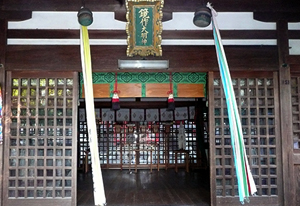
天照の鏡の鋳型を祀る鏡作神社
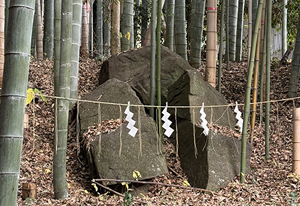
(奈良県磯城郡田原本町)天の岩戸を祀る天岩戸神社
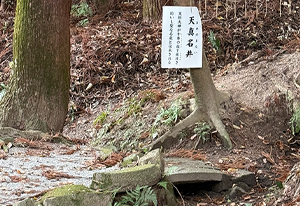
(奈良県橿原市)天照大神が十拳の剣を濯いだという天真名井
(奈良県橿原市・天香久山神社)
2. 伊勢神宮・斎王制度・藤原宮
日本を統一支配するために、豪族対策が打ち出され、農を基本とした経済政策を確立し、皇位継承問題を整えることで、権威を天皇に一元化していく。そのためにこそ「天照大神」を「日本の最高神」に位置づけなければならなかったわけです。
天照大神による支配の仕組み=この支配の枠組みを実際につくったのが天武天皇であり、その正室・鵜野皇女(後の持統天皇)と、天武の皇子、皇女たちが肉付けを行ったというのが、僕の結論とするところです。
しかし、そのために天照大神を最高神として定着させるとともに、天上界からその天照の子孫が降臨し、地上界を支配するようになった。
そして、その天照大神の子孫が天皇家だという「天孫降臨神話」をあまねく日本の隅々に定着させねばなりません。
そのためにこそ、伊勢神宮が創設されます。
その前段として、天照大神の象徴たる神鏡「八咫鏡(やたのかがみ)」を皇居に置くのは恐れ多いと、「八咫鏡」が皇居から持ち出され、落ち着くべき正当な場所を探し伊勢神宮がはじまるというストリーが生み出されます。次いで天皇家が天照大神を祀っていることを周知させるため、天皇家の血をひく未婚の女性が、天照大神をお世話する「斎宮御所」が創設されます。まず天武天皇と亡くなった正室である大田皇女との間に生まれた「大伯皇女」、大津皇子の姉になりますが、彼女が初代斎王となって天照大神に仕える役割を果たすことになりました。
斎宮というのは、今も述べましたように、天皇に代わって天照大神のお世話をする役所であり、その長官に当たるのが斎王なわけです。
皇族の中から未婚の女性が亀卜(亀の甲羅を焼く占い)によって選ばれ、その天皇一代限り、斎王を務めることになります。
この斎王制度が創始されたのが、天武天皇の時代であり、その初代斎王が天武天皇の娘、大伯皇女(大津皇子の実の姉)になる訳です。そしてこの斎王制度の創設と伊勢神宮の創設が同時期に行われているのですが、伊勢神宮の創設時期はこれより遥か昔であるような創作がなされ、研究者を煙に巻いているというのが本当のところだと思います。
またこの時期、同時に藤原宮の造営が着手されており、伊勢二見ヶ浦と藤原宮は東西線上に位置するように造営された可能性が高いと言えます。
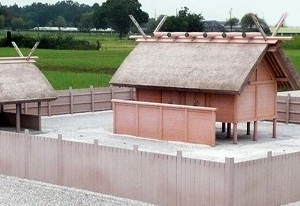
斎王が祭祀を行ったという神殿の復元模型
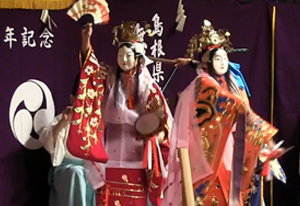
(三重県多気郡明和町)いわみ神楽「天岩戸」(無形文化財) 藤原宮のメインストリート・朱雀大路
(奈良県橿原市)
3. 天照神話の普及と柿本人麻呂
伊勢神宮の創設、藤原宮の造営、斎宮御所の設立と、大仕掛けの枠組みができると、次に下々へ「天孫降臨神話」を普及させ、大和の唯一の支配者は天皇だという事実を、全国津々浦々のいきわたらせる必要が起こってきます。
そして、この「国造り神話」あるいは「天孫降臨神話」の創作と普及で大きな力となったのが、後に宮廷歌人と言われるようになった柿本人麻呂だと思うのです。
支配の裏付けとなる国史の編纂が急務となりました。これはのちに「日本書紀」として完成されますが、その前段階として全国から「風土記」が集められ、これをもとに「古事記」が編纂されることになります。
ここに天照大神と日本国の誕生の経緯が神話として語られ、天上世界から、天照大神に地上世界を託された天孫ニニギノミコトが降臨し、日本の国が誕生するという支配の裏付けとなる神話が創作されます。
ちょっと待って、「古事記」は、稗田阿礼が口承し、これを太安万侶が編纂したもので、柿本人麻呂など、何処にも出てこないじゃないですか、そんな声が聞こえてきそうです。果たしてそうでしょうか?
結論から言ってしまうと、僕自身は、天照神話の骨組みは、天武天皇の指揮下、鵜野皇女(後の持統天皇)と、天武の皇子、皇女たちグループ、ここに柿本人麻呂が加わって形作られ、元明天皇(草壁皇子の正妃)の代に完成されたものだと思っているのです。
さらに言えば、稗田阿礼こそ柿本人麻呂であり、彼が太安万侶のもとで「古事記」編纂に携わった。
そして、その場所こそ奈良の稗田(現大和郡山市稗田町)と考えております。
柿本寺跡/柿本氏の大和の本拠地
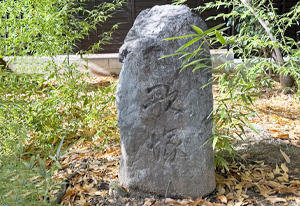
(奈良県天理市)柿本人麻呂の毛髪が埋められたという「歌塚」
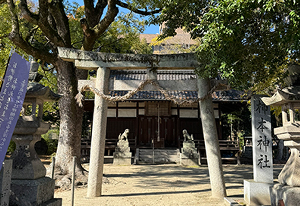
(奈良県葛城市・柿本神社)柿本人麻呂の墓がある柿本山影現寺
(奈良県葛城市・柿本神社)
4. 壬申の乱と「空白の一か月」
ここから、私の思索はいよいよ想像の領域に入ります。
壬申の乱当時、高市皇子は18歳前後だったと思われますが、人麻呂はこれより少し下の15、6歳ではなかったでしょうか?
ちなみに挽歌とは、人の死を悲しみ悼む歌であり、高市皇子の死を悼んで、人麻呂が、藤原宮の朝堂院あたりで香久山――ここに高市皇子の宮があったと言われていますが、その香久山に向かって歌ったのではと伝えられています。
というのも、万葉集の中に、人麻呂が歌った「高市皇子の挽歌」が残されており、これほど壮大な挽歌が歌われるのは、二人の間に親交があったのではと言われていますが、僕はそれ以上に、まるで雄々しい高貴な兄に捧げるような憧憬が感じられるのです。壬申の乱勃発に当たり、人麻呂は、そんな兄とも慕う高市皇子にしたがって近江京を脱出したのでは……。
そして人麻呂の父である柿本大庭(かきのもとのおおば)が高市皇子に付き従って大海人軍に合流した――
脱出に当たっては、幼い大津皇子や草壁皇子、大伯皇女を伴っての脱出であり、兵を起こした父・大海人皇子(天武天皇)の軍にいち早く合流したい高市皇子は、人麻呂の邸(葛城市柿本あるいは天理市櫟本)に幼い皇子たちを匿い、その護り役に人麻呂を残した。
というのが、僕のたどり着いた結論「史料に現れない一か月間」です。証明はできません。
しかし、私自身の中では強い実感を伴って浮かび上がってきたイメージです。
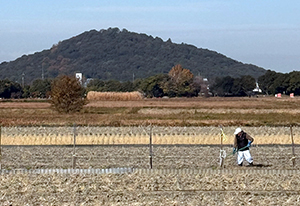
藤原京から香久山を望む
(奈良県橿原市)香久山の麓/高市皇子の邸はこの辺りに?
(奈良県橿原市)藤原京から耳成山を望む
(奈良県橿原市)
5. 天武帝亡き後と柿本人麻呂の行く末
壬申の乱が終息して9年後の681年、天武天皇は『帝紀』と『旧辞』の編纂を命じました。
ところで、この『帝紀』『旧辞』の編纂事業が、後に古事記や日本書紀の編纂へ繋がっていくわけですが、これ以前に、天武帝はその下準備として、柿本人麻呂の才能を高く評価し、その才能を活かし、漢語や中国の文化を徹底的に学ばせたように思うのです。当時は日本語を表すのに固有の文字はなく、何を表すにも漢語で表記し、高度な漢文の素養が求められる時代でした。
柿本人麻呂を中心にして、国史編纂を前提とした、漢語や中国の文化を学ぶサロンが、天武の皇子、皇女を中心に営まれたように感じます。
大津皇子の漢詩の素養も、大伯皇女をはじめとする諸皇子の和歌の才もこの時に磨かれたものだと思います。しかし、この漢文化を学ぶサロンが、一方では国史編纂の大きな力となる一方で、「草壁皇子を担ぎ上げる勢力」と「大津皇子を担ぎ上げる勢力」との政治的思惑がぶつかる場所ともなっていったのです。
柿本人麻呂は、この天武帝の庇護のもとで才能が育まれていきました。
しかし、その最大の理解者である天武帝が、『帝紀』『旧辞』の編纂を企画した5年後の686年、持病である脚気が悪化し崩御するに至りました。 生年が不詳のため、天武帝が何歳で亡くなったのかは不明ですが、推定されるところでは50代後半と考えられ、持病の脚気が悪化したとはいえ、あまりに突然の死だったように思われます。皇太子となった「草壁皇子の取り巻き」、また実力では草壁を超えると言われる「大津皇子の取り巻き」。
この二つの取り巻き勢力を無視することはできません。天武帝がいま少し永らえれば状況は変わっていたかもしれませんが、帝の死はあまりに早く、あまりに突然だったように感じます。
皇太子とは言え、草壁には、この状況を抑えるだけの力はありません。草壁の母であり、天武の皇后である鸕野讃良に重圧がかかってきます。
その戸惑いが、2年に及ぶ天武帝の殯(もがり)の異例の長さとして表れています。
このままいけば、天智・天武の争いに次いで、自分の子・草壁と姉の子・大津の間で、第二の壬申の乱が起こりかねません。天武新体制を維持させるため、過酷な決断が求められました。
天武天皇の死後、大津皇子が謀反の罪で死に処せられ、皇太子である草壁皇子も天武帝の殯が明けて原因不明の死を遂げています。
次期皇位継承者とも目される高市皇子も持統女帝の即位後原因不明の死を遂げています。
天武の死後、十年足らずの間に、皇位継承者と目される三名の諸皇子が次々と不可解な形で亡くなっていきます。その背後に、持統女帝と藤原不比等の存在を感じずにはいられません。
柿本人麻呂は、諸皇子とつながりが深く、これらすべてを知る位置にいました。
政権から抹殺されても仕方がない位置にいたと言えます。
しかし、彼は殺されることはありませんでした。
その代償とでもいうのでしょうか、自由も許されず、宮廷歌人という立場で持統女帝のそば近くに置かれていたように感じます。
それは、ある意味での保護であり、同時に監視でもあったように思われます。当時の日本には、日本の言葉を表すのに漢語しかありませんでした。
中国の文化に通じ、漢語を自在に操り、日本の文字(大和仮名・万葉仮名)として定着していく柿本人麻呂の才能は、「古事記」編纂になくてはならぬものでした。
だからこそ、人麻呂を殺すことはできなかったのでは――。『古事記』が完成したとき、人麻呂の役割は終わりました。
彼は編者として名を残すことを許されず、稗田阿礼としてその仕事を果たし、やがて地方へと回され、原因不明の死を迎えます。「天照大神」という国家神話が完成することは、柿本人麻呂という天才の沈黙と引き換えだった――
私は、そう感じています。
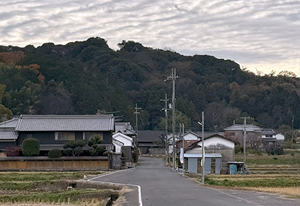
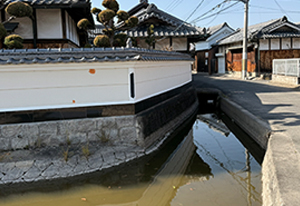
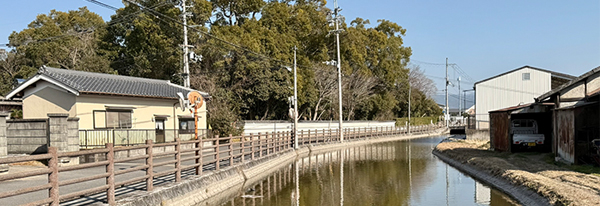
稗田環濠集落 (奈良県大和郡山市) 稗田環濠集落と売田神社(奈良県大和郡山市)
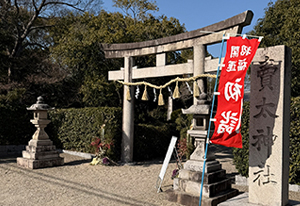
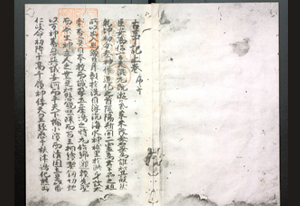
売田神社 (奈良県大和郡山市) 阿礼祭記念碑 (売田神社) 表意漢字と表音漢字が混在する古事記
(国立国会図書館蔵)
おわりに
こうして天照神話は国家の基盤として定着し、伊勢神宮と斎宮制度を軸に、神社や神楽を通じて庶民の中に深く根付いていきました。
それは、日本という国の骨格を形作る物語となったのです。この物語が史実かどうかは、もはや重要ではありません。
ここに、その思いを記して、この覚書を閉じたいと思います。
少なくとも私にとっては、長い時間をかけて歩き、考え、感じてきた末に辿り着いた、ひとつの納得のかたちです。
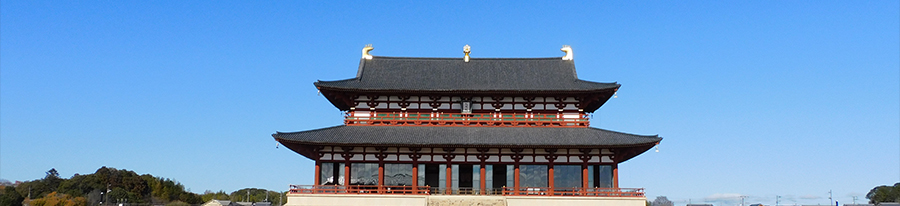
復元された平城宮大極殿 柿本人麻呂が遂に見ることはありませんでした。(奈良県奈良市二條大路)




Bottle No. 5 – The Amaterasu Myth and Kakinomoto no Hitomaro
Introduction
This series of notes on Amaterasu Ōmikami has now reached its final chapter.
From this point on, the discussion takes on a slightly different tone from the arguments I have presented so far, which were based on historical records and archaeological findings.Within myself, however, there remains a single image that has steadily taken shape—an image that has emerged only after years of tracing this period and the people who lived through it.
It is not something that can be proven.
It is, rather, a personal reflection, guided by intuition and imagination.In that sense, what follows may fairly be called speculation.
Even so, it is the story that I myself find most convincing after a long period of study and contemplation.
I would like to make that clear at the outset.
1. The Reigns of Emperor Tenmu and Empress Jitō, and the System Centered on Amaterasu
When we look back on the political reforms of Emperor Tenmu and those of Empress Jitō, who inherited his intentions, a consistent direction becomes apparent.That direction was the gradual consolidation of military power, economic strength, and religious authority—previously held by individual clans—into the hands of the emperor.
This trajectory itself was an extension of the policies pursued by Emperor Tenji since the Taika Reforms.
However, Emperor Tenji did not succeed in fixing imperial succession firmly along a direct lineage, and that unresolved tension ultimately erupted as the Jinshin War.Ironically, it was Tenji’s younger brother, Emperor Tenmu, who finally completed a system of direct imperial succession.
During the reigns of Tenmu and Jitō, a decisive new element was introduced—one that had not existed before.
This was the systematization of the gods with Amaterasu Ōmikami placed at their apex: in other words, the centralization of the divine order.Originally, Amaterasu appears to have been deeply connected to forms of worship practiced primarily among maritime peoples.
By elevating this deity to the status of a state god and by introducing the concept of a heavenly realm, a new narrative was constructed: the descendants of Amaterasu descend from the heavens and rule the earthly world.
This is what we know as the myth of the Heavenly Descent.The earlier image of a god arriving horizontally from beyond the eastern sea was transformed into a vertical movement—from the heavens down to the land below.
Through this myth, a new logic was established: the emperor was the direct descendant of Amaterasu, the supreme deity of the world.
The gods of local clans were integrated beneath Amaterasu, and imperial succession was likewise restricted to those of that divine lineage.
Kagami-tsukuri Shrine
Shrine enshrining the casting mold said to have been
used for Amaterasu’s sacred mirror)Amano-Iwato Shrine
A shrine dedicated to the Heavenly Rock Cave, where Amaterasu is said to have hidden herself.Amano-Manai Well
A sacred spring where Amaterasu is said to have
washed the Ten-span Sword.
2. Ise Grand Shrine, the Saigū System, and Fujiwara Palace
In order to unify and govern the country, it was necessary to implement measures to control powerful clans, establish an agrarian-based economy, and resolve issues of imperial succession.
For this purpose, Amaterasu had to be positioned unmistakably as the supreme deity of Japan.In my view, the framework of rule centered on Amaterasu was devised by Emperor Tenmu himself, and subsequently elaborated by his consort Uno no Sarara (later Empress Jitō), together with Tenmu’s sons and daughters.
Once Amaterasu was established as the highest deity, it became essential to disseminate the myth that her descendants descended from the heavens and ruled the land—and that those descendants were the imperial family.
This myth had to permeate every corner of the country.It was for this purpose that Ise Grand Shrine was established.
According to the narrative that developed, it was considered too awe-inspiring to keep the sacred mirror, Yata no Kagami, within the imperial palace.
The mirror was therefore taken out, and after searching for its rightful resting place, Ise was chosen.Next, in order to make it widely known that the imperial family personally worshipped Amaterasu, the Saigū system was created.
An unmarried woman of imperial lineage would serve Amaterasu on behalf of the emperor.The first to assume this role was Ōku no Himemiko, the daughter of Emperor Tenmu and his late consort Princess Ōta, and the elder sister of Prince Ōtsu.
As noted earlier, the Saigū was the institution that served Amaterasu in place of the emperor, and its head was the Saio.
A single unmarried woman was selected through divination using turtle shells and would serve for the duration of one emperor’s reign.Although the establishment of the Saigū and Ise Shrine occurred during Emperor Tenmu’s time, later narratives deliberately pushed the origins of Ise much further back into the distant past—perhaps to lend the institution greater authority.
At the same time, construction began on Fujiwara Palace, and it is highly likely that Fujiwara Palace and Ise (specifically Futami-ga-ura) were deliberately aligned along an east–west axis.
Saikū Historical Site
A reconstructed model of the sanctuary where the Saio Imperial Priestess) is said to have performed rituals.Iwami Kagura – Amano-Iwato
Iwami Kagura performance depicting the myth of
the Heavenly Rock Cave.
(Designated Intangible Cultural Property).Suzaku Avenue of Fujiwara Palace
The main ceremonial avenue of Fujiwara Palace, once
the heart of the ancient capital.
3. The Spread of the Amaterasu Myth and Kakinomoto no Hitomaro
With the establishment of Ise Shrine, Fujiwara Palace, and the Saigū, a grand framework was now in place.
The next task was to disseminate the myth of the Heavenly Descent throughout the country and to ensure that the emperor was recognized everywhere as the sole legitimate ruler of Yamato.I believe that the person who played a crucial role in creating and spreading this nation-building myth was Kakinomoto no Hitomaro, later revered as a court poet.
The compilation of an official national history became an urgent matter.
This effort would later culminate in the Nihon Shoki, but beforehand, provincial gazetteers (Fudoki) were collected and used as the basis for compiling the Kojiki.Within the Kojiki, the origins of Amaterasu and the birth of Japan are narrated as myth.
The descent of Ninigi-no-Mikoto, entrusted with the earthly realm by Amaterasu, becomes the foundational story legitimizing imperial rule.At this point, one might object: the Kojiki was orally transmitted by Hieda no Are and compiled by Ō no Yasumaro—where, then, does Hitomaro appear?
But is that truly the case?
My own conclusion is that the framework of the Amaterasu myth was shaped under Emperor Tenmu’s direction by a group consisting of Princess Uno (later Empress Jitō), Tenmu’s sons and daughters, and Kakinomoto no Hitomaro, and that it was completed during the reign of Empress Genmei, the consort of Prince Kusakabe.
I would go further still: I believe that Hieda no Are was none other than Kakinomoto no Hitomaro himself, and that he participated in the compilation of the Kojiki under Ō no Yasumaro.
The place where this work was carried out, I suspect, was Hieda in Nara—present-day Hieda-chō in Yamatokōriyama City.
Kakimoto Temple Ruins
Ruins believed to mark the Yamato base of
the Kakimoto clan.Uta-zuka Mound
The “Poem Mound,” where Kakinomoto no Hitomaro’s
hair is said to be buried.Eigen-ji (Shihon-zan)
The temple traditionally believed to stand at the site of Kakinomoto no Hitomaro’s gravel.
4. The Jinshin War and the “Missing Month”
From here on, my reflections move fully into the realm of imagination.At the time of the Jinshin War, Prince Prince Takechi is thought to have been around eighteen years old.
I believe Hitomaro was slightly younger—perhaps fifteen or sixteen.One reason for this impression lies in the elegy that Hitomaro composed for Prince Takechi, preserved in the Man’yōshū.
Such a grand and deeply felt elegy suggests more than a formal relationship.
To me, it reads like a song offered to a noble and valiant elder brother, filled with admiration and reverence.An elegy, of course, is a poem mourning the dead.
It is said that Hitomaro recited this poem toward Mount Kagu, where Prince Takechi’s residence once stood, perhaps from the vicinity of the Fujiwara Palace audience hall.When the Jinshin War broke out, I imagine that Hitomaro followed the prince he so admired and fled the Ōmi capital with him.
They were accompanied by the young Prince Ōtsu, Prince Kusakabe, and Princess Ōku.Eager to join the forces of his father, Prince Ōama (later Emperor Tenmu), Prince Takechi is said to have hidden the children at Hitomaro’s residence—possibly in Katsuragi or Isonokami—and left Hitomaro behind as their guardian.
Hitomaro’s father, Kakinomoto no Ōba, then accompanied Prince Takechi to join Ōama’s army.
This, I believe, was the “missing month” that never appears in the historical records.
I cannot prove it.
Yet it is an image that has arisen within me with striking clarity.
Mount Kagu seen from the former
Fujiwara CapitalMount Kagu Foothills
The foothills of Mount Kagu—possibly the area where
Prince Takechi’s residence once stood.Mount Miminashi seen from the former
Fujiwara Capital
5. After Emperor Tenmu’s Death: The Fate of Hitomaro
Nine years after the Jinshin War, in 681, Emperor Tenmu ordered the compilation of the Teiki and Kyūji.
This project would later lead to the compilation of the Kojiki and Nihon Shoki.Even before this, I believe Tenmu recognized Hitomaro’s exceptional talent and ensured that he was thoroughly trained in Chinese language and culture.
At the time, Japanese had no indigenous writing system, and all official expression depended on classical Chinese.Around Hitomaro, a kind of salon seems to have formed, centered on Tenmu’s sons and daughters, devoted to the study of Chinese learning in preparation for national historiography.
The poetic talents of Prince Ōtsu and Princess Ōku, among others, were likely refined in this environment.At the same time, however, this intellectual circle became a site of political tension, where factions supporting Prince Kusakabe and Prince Ōtsu inevitably clashed.
Hitomaro’s talents flourished under Emperor Tenmu’s protection.
But in 686, only five years after commissioning the Teiki and Kyūji, Tenmu died suddenly, his chronic illness worsening.
He is thought to have been in his late fifties—an age that makes his death feel abrupt.With Tenmu gone, pressure fell heavily on his consort Uno no Sarara.
The unusually long mourning period of two years for Tenmu reflects her hesitation and anxiety.
If left unchecked, conflict between Kusakabe, her own son, and Ōtsu, her sister’s son, could easily have led to a second Jinshin War.A harsh decision was required to preserve the new regime.
Prince Ōtsu was executed on charges of rebellion.
Prince Kusakabe, though crown prince, later died of unknown causes.
Prince Takechi also died under mysterious circumstances after Empress Jitō’s accession.Within less than a decade, three potential successors vanished.
Behind this, I cannot help but sense the presence of Empress Jitō and Fujiwara no Fuhito.
Hitomaro was closely connected to all the princes and knew too much.
He could easily have been eliminated.
Instead, he was kept alive—deprived of freedom, placed close to the empress as a court poet.
It was both protection and surveillance.At the time, only Chinese could be used to record the Japanese language.
Hitomaro’s rare ability to shape Japanese expression through Chinese characters—what would later become Man’yōgana—was indispensable for compiling the Kojiki.
For that reason, perhaps, he could not be killed.Once the Kojiki was completed, Hitomaro’s role came to an end.
Denied credit as an editor, he fulfilled his task under the name Hieda no Are, was sent to provincial posts, and eventually died under unknown circumstances.The completion of the national myth of Amaterasu came at the cost of the silence of a genius.
That is how it appears to me.
Hieda Moated Settlement
(Yamatokoriyama, Nara Prefecture)Hieda Moated Settlement and Meta Shrine(Yamatokoriyama, Nara Prefecture)
Meta Shrine
(Yamatokoriyama, Nara Prefecture)Are Festival Memorial
(Meta Shrine, Yamatokoriyama)Kojiki manuscript
The Kojiki, where logographic and phonetic Chinese
characters coexist. (National Diet Library Collection).
Conclusion
In this way, the Amaterasu myth became firmly established as the foundation of the state.
Through Ise Shrine and the Saigū system, and through shrines, rituals, and sacred performances, it took root among the people.It became the story that shaped the very framework of Japan.
Whether this account is historically accurate is no longer the central question.
For me, it is the form of understanding I reached after years of walking, thinking, and feeling my way through this landscape.Here, I record these thoughts and bring these notes to a close.
Heijō Palace Daigokuden (reconstructed)
The reconstructed Great Hall of State at Heijō Palace—something Kakinomoto no Hitomaro never lived to see.